
Computer-assisted precision
Robotic Orthopedic Surgery in Ahmedabad, Gujarat
Robotic-assisted surgery does not replace the surgeon - it makes the plan measurable. A 3D model of your joint is built from your scan, implant position is planned to the degree, and the robotic arm keeps the cut inside that plan.
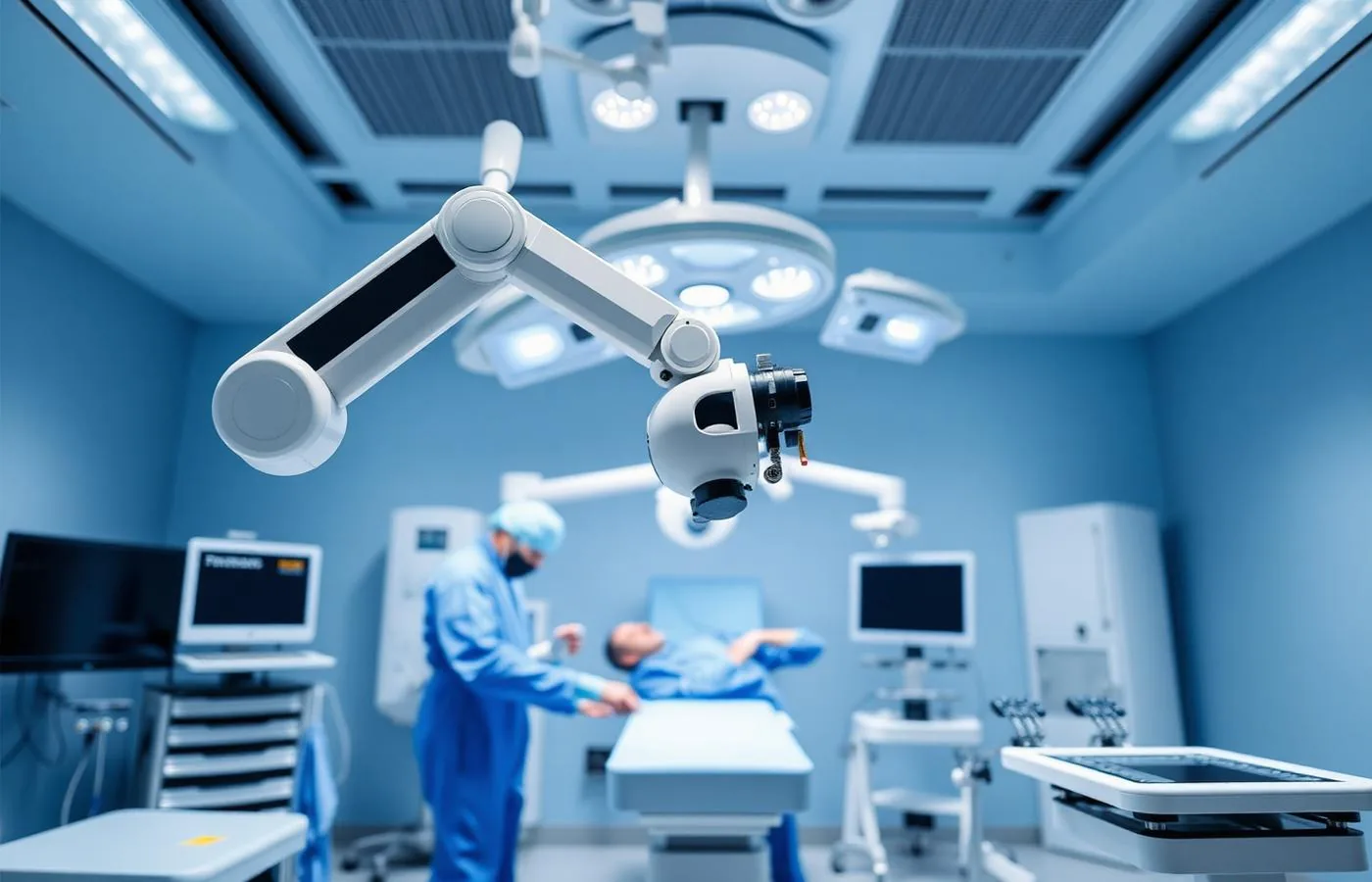
- 3D pre-operative planning from your own CT/X-ray
- Sub-millimetre implant alignment
- Soft tissue and ligament balance measured live
- Less bone removal and typically less post-op pain
What robotic assistance actually changes
In conventional knee replacement the surgeon aligns implants using jigs and experience. Small alignment errors are common and are one reason some replaced knees never feel natural.
With robotic assistance, the system tracks your leg in real time. Gaps and ligament tension are shown as numbers on screen, so balance is corrected before a single cut is made rather than judged afterwards.
Procedures performed with robotic assistance
- Total knee replacement
- Partial (unicondylar) knee replacement
- Total hip replacement with accurate cup positioning
- Complex deformity cases - severe varus, valgus or post-trauma knees
Recovery after robotic surgery
Because bone and soft tissue handling is more controlled, most patients stand within a few hours, walk with a frame on day one and climb stairs before discharge.
A structured 6-week physiotherapy programme follows, with review at 2 weeks, 6 weeks and 3 months. Most desk-based patients in Ahmedabad return to work within 4 to 6 weeks.
Patients considering robotic joint replacement travel to this Ahmedabad centre from Surat, Vadodara, Rajkot, Bhavnagar and Gandhinagar for access to the technology and the surgeon's experience using it.
Frequently asked questions
Is robotic knee replacement worth the extra cost in Ahmedabad?
For most patients the benefits are more accurate alignment, better ligament balance and a knee that feels more natural. The cost difference is discussed openly at consultation so you can decide.
Does the robot perform the surgery?
No. The surgeon performs the operation. The robotic arm restricts cutting to the pre-planned boundary, which improves accuracy and protects surrounding tissue.
Is robotic surgery safe for elderly patients?
Yes. Shorter, more controlled bone work and reduced soft tissue trauma often make it a good choice for older patients, subject to medical fitness.